Introduction:
The biggest handheld gaming trends of 2026 driving growth is something we need to talk about.
A few years ago, “handheld gaming” usually meant a phone, a Switch, or an old PSP sitting in a drawer. In 2026, that entire image has changed. Devices like Steam Deck-style PCs and ROG Ally-type handhelds have moved from niche to mainstream—and the conversation around them keeps growing.
So what’s driving this shift? It’s not just one product or one trend. Several upgrades and lifestyle changes are coming together at the same time, making handhelds more appealing than ever.
In this article, we’ll cover the biggest reasons handheld gaming is booming in 2026, what makes these devices worth buying (or not), and whether this is the right year for you to join the handheld trend.
What’s Really Driving the Handheld Boom in 2026?
Handheld gaming isn’t exploding because of a single “killer feature.” It’s growing because multiple things finally caught up.
1) Real PC libraries are now portable
The biggest change is simple: modern handheld PCs can run actual PC gaming libraries, not just a small curated selection. That means the games you already own on your launcher/store can follow you—from desktop to couch, bedroom, or wherever you want to play.
This eliminates one of the biggest barriers handhelds used to have: the feeling that you were trading away your library for portability.
2) Hardware finally feels capable—not compromised
Earlier generations often struggled to meet expectations. Games might run, but performance or visual quality could feel rough enough to make the experience feel like a downgrade.
By 2026, handheld devices are delivering playable settings for demanding titles, which changes how people evaluate handhelds. Instead of “Can it run games?” more players are asking “Can I enjoy it?”
3) Convenience beats pure power
As schedules get busier and living spaces get smaller, the appeal of one device that plays anywhere keeps winning.
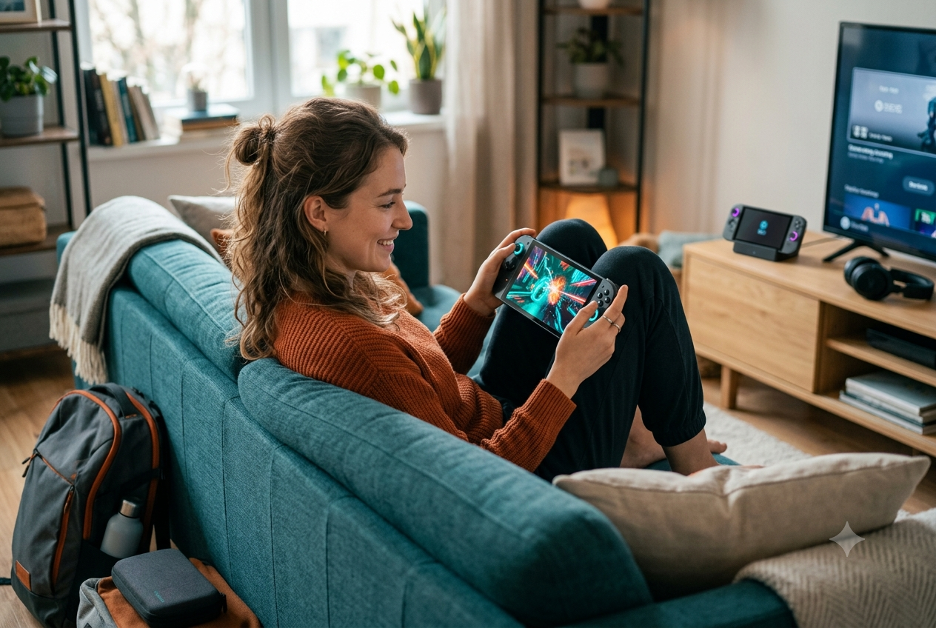
A handheld fits into daily life: commutes, lunch breaks, couch time, waiting rooms, travel days—places a desktop gaming setup just doesn’t reach.
4) Handhelds match how many people already game
Most players don’t live inside one genre. They mix story games, indie favorites, and the occasional bigger release. Modern handhelds are great for that variety, especially for games that feel good in short sessions.
(If you’re building your library, this is exactly the kind of mix you’d see in our recommended guides about Best Games to Buy with a Steam Gift Card in 2026 —because the handheld-friendly games tend to be the ones that replay easily and run well on the go.)
Handheld vs Console vs PC: Where It Actually Fits
Handhelds aren’t trying to replace consoles or high-end gaming PCs across the board. They’re carving out a different “sweet spot” between them.
Compared to consoles
You usually trade some raw performance and “plug-and-play simplicity,” but gain portability and flexibility, especially if you’re using a handheld that supports broader PC libraries.
Compared to a gaming PC
A handheld won’t beat your desktop in maximum settings. But it can be just as satisfying when the real goal is playing your existing library anywhere—without owning a second gaming setup.
Compared to cloud gaming
Handheld gaming solves the hardware problem differently: it gives you local performance in your hands. No reliance on internet stability for every session.
More and more players are combining both:
- Handheld locally at home
- Cloud streaming when traveling or when the connection is strong
That hybrid approach is quickly becoming a favorite because it avoids forcing players to choose only one option.
Who Should Buy a Handheld in 2026?
Handheld gaming is a strong fit for a lot of players—but not everyone.
It’s a good choice for:
- PC gamers who want mobility
If your library is already on Steam or PC launchers, a handheld lets you play it anywhere without repurchasing. - Players with limited space or shared living situations
No need for a dedicated gaming station—your handheld becomes the setup. - Commuters and travelers
Waiting becomes playtime. Flights, trains, and downtime stop feeling “dead.” - People who want to reduce console dependency
Handheld PCs can offer more freedom, especially if you’re tired of being tied to one ecosystem.
It may not be the best choice if:
- You only care about the highest frame rates and max settings
- You mainly game from your desk already and never feel the need to play away from it
A handheld is about flexibility and convenience first—performance second.
How to Get the Most Out of a Handheld
Buying a handheld is one thing. Getting the best experience is another. A few tips can make a huge difference.
1) Match expectations to the device tier
Not every handheld runs every game the same way. Some handle newer releases smoothly; others require adjusted settings. Look at performance benchmarks for the games you actually care about.
2) Plan for battery life realistically
Demanding games can drain power fast. Knowing your typical session length per charge helps you avoid mid-game disappointments.
3) Build a handheld-friendly library
Certain genres tend to shine on handhelds:
- indie games
- turn-based games
- story-driven titles
- games that are fun in short bursts
This makes handheld play feel natural instead of exhausting.
4) Consider docking for “console-style” home play
Most handhelds can connect to a TV or monitor. That lets you enjoy a bigger screen at home while staying portable outside.
5) Don’t overspend on accessories before you know your habits
Cases, docks, extra controllers—those add up. Try the core device first, then upgrade based on how you actually play.
Frequently Asked Questions
Are handhelds powerful enough for modern games in 2026?
Yes for most mainstream experiences. Many devices can run recent games at adjusted settings. The trade-off is typically between visuals/performance vs portability.
Will a handheld work with my existing PC game library?
In most cases, yes. Handheld PCs are designed to run PC libraries, which usually means you don’t have to start from zero.
Is handheld gaming better than cloud gaming?
They solve different problems:
- Handhelds give you local hardware and offline-friendly reliability.
- Cloud gaming gives you powerful remote performance through an internet connection.
Many players use both, depending on where they are and how good the internet is.
What games are best on a handheld?
Indie titles, turn-based games, and story-driven adventures are usually the most satisfying—though many bigger titles are still playable at tuned settings.
Conclusion
Handheld gaming’s biggest year yet in 2026 isn’t an accident. It’s the result of better hardware, more portable access to real libraries, and players who want their gaming to fit modern life—not the other way around.
Whether a handheld is replacing a second gaming device, extending your PC library to the couch, or pairing with cloud streaming for maximum flexibility, the trend is clear: handheld gaming is no longer a niche side hobby.
If 2026 really is the year gaming goes more fully portable for mainstream players, a handheld is one of the easiest ways to get there.